



DNA/RNA Synthesis
RNA synthesis, which is also called DNA transcription, is a highly selective process. Transcription by RNA polymerase II extends beyond RNA synthesis, towards a more active role in mRNA maturation, surveillance and export to the cytoplasm.
Single-strand breaks are repaired by DNA ligase using the complementary strand of the double helix as a template, with DNA ligase creating the final phosphodiester bond to fully repair the DNA.DNA ligases discriminate against substrates containing RNA strands or mismatched base pairs at positions near the ends of the nickedDNA. Bleomycin (BLM) exerts its genotoxicity by generating free radicals, whichattack C-4′ in the deoxyribose backbone of DNA, leading to opening of the ribose ring and strand breakage; it is an S-independentradiomimetic agent that causes double-strand breaks in DNA.
First strand cDNA is synthesized using random hexamer primers and M-MuLV Reverse Transcriptase (RNase H). Second strand cDNA synthesis is subsequently performed using DNA Polymerase I and RNase H. The remaining overhangs are converted into blunt ends using exonuclease/polymerase activity. After adenylation of the 3′ ends of DNA fragments, NEBNext Adaptor with hairpin loop structure is ligated to prepare the samples for hybridization. Cell cycle and DNA replication are the top two pathways regulated by BET bromodomain inhibition. Cycloheximide blocks the translation of mRNA to protein.
DNA/RNA Synthesis Isoform Specific Products
All Product Categories
-
DNA/RNA Synthesis Inhibitors
(1479)
View all products
-
DNA/RNA Synthesis Agonists
(11)
View all products
-
DNA/RNA Synthesis Antagonists
(2)
View all products
-
DNA/RNA Synthesis Activators
(52)
View all products
-
DNA/RNA Synthesis Modulators
(34)
View all products
-
DNA/RNA Synthesis Chemicals
(20)
View all products
-
DNA/RNA Synthesis Inducers
(14)
View all products
-
DNA/RNA Synthesis Degraders
(5)
View all products
-
DNA/RNA Synthesis Controls
(5)
View all products
-
DNA/RNA Synthesis Substrates
(6)
View all products
-
DNA/RNA Synthesis Ligands
(5)
View all products
-
DNA/RNA Synthesis Related Products (2930)
Related Products (2930)

-
Antibodies (248)
-
DNA/RNA Synthesis Isoform Comparison
-
Saccharin 1-methylimidazole
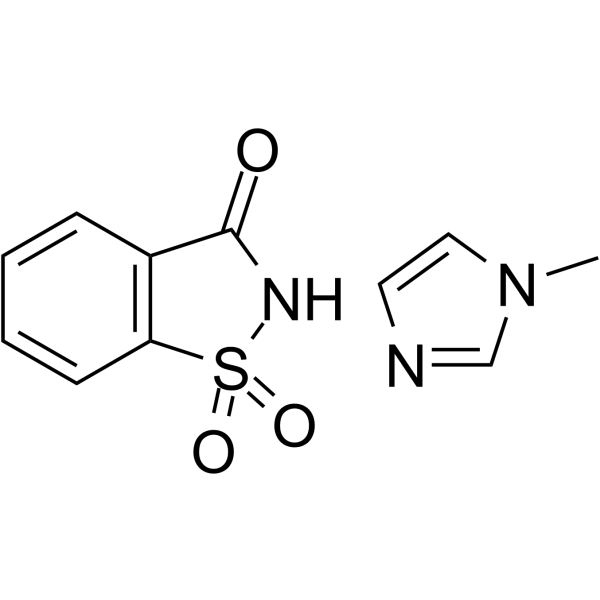 0 ImagesSaccharin 1-methylimidazole is an activator for DNA/RNA Synthesis.
-
Trimidox hydrochloride
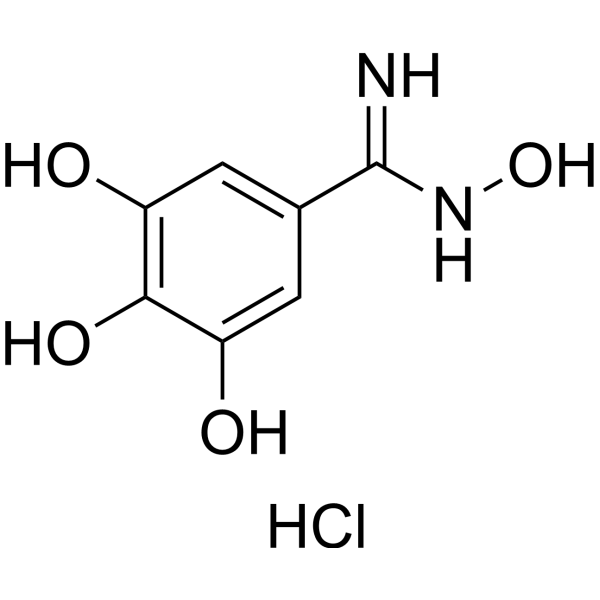 0 ImagesSynonyms: VF-233 hydrochlorideTrimidox hydrochloride (VF-233) is a ribonucleotide reductase inhibitor with antileukemic activities. Trimidox hydrochloride inhibits the growth of human promyelocytic leukemia HL-60 cells with an IC50 of 35 μM.
-
PINT-87aa TFA
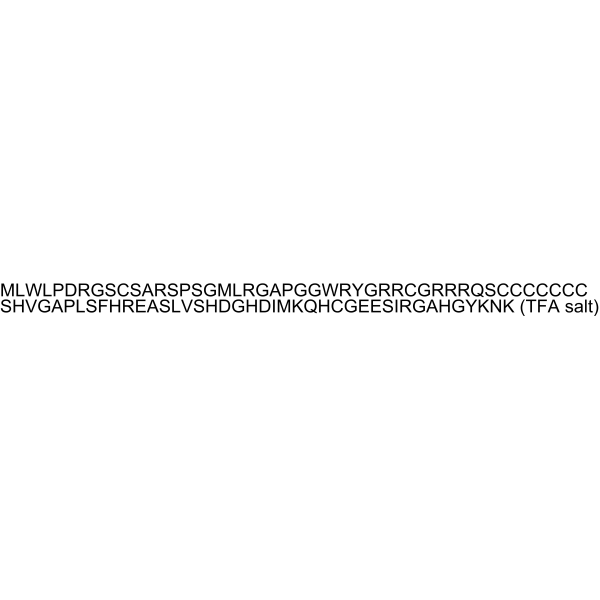 0 ImagesCat. No.: HY-P3103APINT-87aa TFA, an 87-amino acid (aa) peptide, is encoded by the circular form of the long intergenic non-protein-coding RNA p53-induced transcript (LINC-PINT). PINT-87aa TFA directly interacts with polymerase associated factor complex (PAF1c) and inhibits the transcriptional elongation of multiple oncogenes. PINT-87aa TFA suppresses glioblastoma cell proliferation in vitro and in vivo.
-
Diguanosine 5′-triphosphate triammonium
 0 ImagesCat. No.: HY-139099BPurity: 98.85%Synonyms: Gp3G triammoniumDiguanosine 5′-triphosphate (Gp3G) triammonium is a dinucleoside triphosphates. Diguanosine 5′-triphosphate triammonium also is a virus-specific oligonucleotide. Diguanosine 5′-triphosphate triammonium is needed for the synthesis of RNA during the transcription process.
-
7-Nitroindole
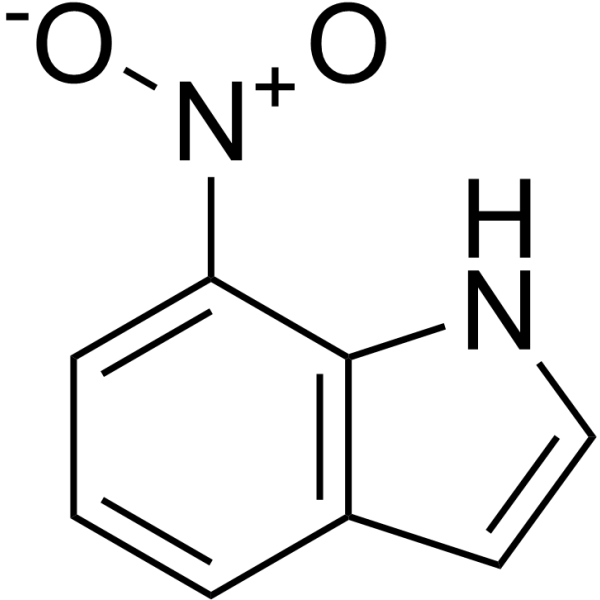 0 Images7-Nitroindole is a cleavable base analog and Antibacterial agent. 7-Nitroindole inhibits the growth of Lactobacillus arabinosus. 7-Nitroindole is used in studies of light-controlled DNA cleavage and Lactobacillus arabinosus infection.

-
Bisdemethoxycucurmin (Standard)
 0 ImagesSynonyms: Curcumin III (Standard); Didemethoxycurcumin (Standard)Bisdemethoxycucurmin (Standard) (Curcumin III (Standard)) is the analytical standard of Bisdemethoxycucurmin (HY-N0007A). This product is intended for research and analytical applications. Bisdemethoxycucurmin (Curcumin III) is a curcuminoid compound and an inhibitor of P-glycoprotein and ferroptosis. Bisdemethoxycucurmin exhibits multiple activities such as anti-oxidation, anti-inflammation and anti-tumor. Bisdemethoxycucurmin can be used for the research of tumors and inflammatory diseases.
-
UTP trisodium salt, 100 mM Solution, PCR Grade
 0 ImagesCat. No.: HY-107372HCAS No.: 19817-92-6Synonyms: Uridine 5'-triphosphate trisodium salt, 100 mM Solution, PCR GradeUTP (Uridine 5'-triphosphate) trisodium salt, 100 mM Solution, PCR Grade is a solution prepared from uridine triphosphate at a concentration of 100 mM, free of DNase, RNase and phosphatase contamination, suitable for molecular biology research. Uridine triphosphate (HY-107372) is a pyrimidine nucleoside triphosphate that is used as a substrate to synthesize RNA or as an energy source in metabolic reactions. Uridine triphosphate activates membrane-bound P2Y2 receptors.
-
Apricitabine
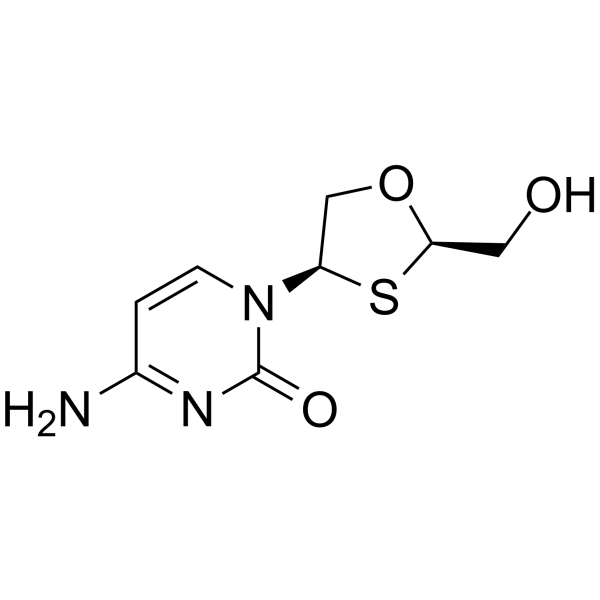 0 ImagesSynonyms: SPD754; AVX754Apricitabine (SPD754; AVX754), the (-) enantiomer of 2′-deoxy-3′-oxa-4′-thiocytidine (dOTC), is a highly selective and orally active HIV-1 reverse transcriptase (RT) inhibitor (Ki=0.08 μM), as well as inhibits DNA polymerases α, β, and γ with Ki value of 300 μM, 12 μM, and 112.25 μM, respectively. Apricitabine (SPD754; AVX754) shows promising antiretroviral efficacy, good tolerability and a low propensity for resistance selection in antiretroviral-naive HIV infection.
-
1'-epi Gemcitabine hydrochloride
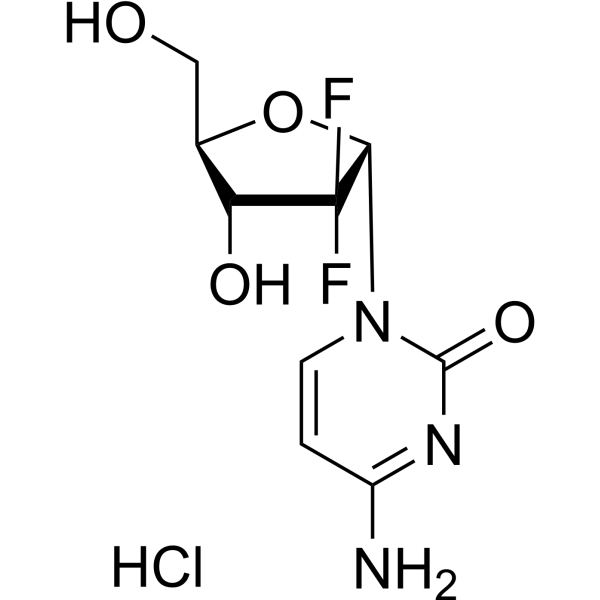 0 ImagesSynonyms: 1'-epi LY 188011 hydrochloride1'-epi Gemcitabine hydrochloride is the isomer of Gemcitabine hydrochloride (HY-B0003), and can be used as an experimental control. Gemcitabine Hydrochloride (LY 188011 Hydrochloride) is a pyrimidine nucleoside analog antimetabolite and an antineoplastic agent. Gemcitabine Hydrochloride inhibits DNA synthesis and repair, resulting in autophagyand apoptosis.
-
EFdA-TP tetraammonium
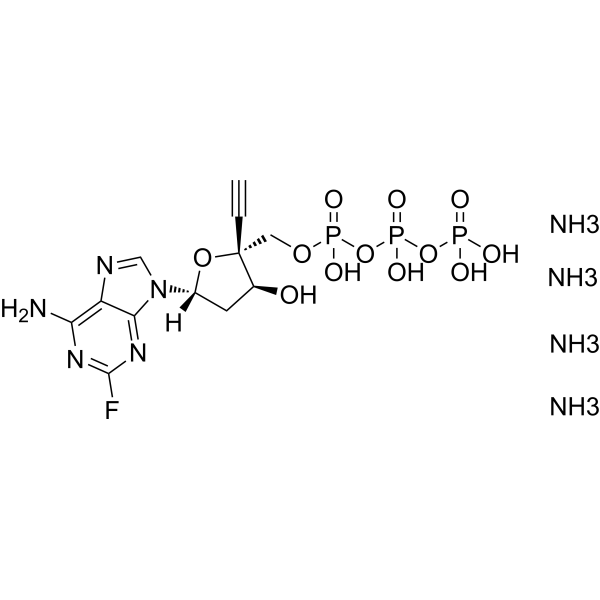 0 ImagesCat. No.: HY-138561AEFdA-TP tetraammonium is a potent nucleoside reverse transcriptase (RT) inhibitor. EFdA-TP tetraammonium inhibits RT-catalyzed DNA synthesis as an effective immediate or delayed chain terminator (ICT or DCT). EFdA-TP tetraammonium inhibits HIV-1 RT with multiple mechanisms. EFdA-TP (tetraammonium) is a click chemistry reagent, it contains an Alkyne group and can undergo copper-catalyzed azide-alkyne cycloaddition (CuAAc) with molecules containing Azide groups.
-
5-Propargylamino-ddCTP
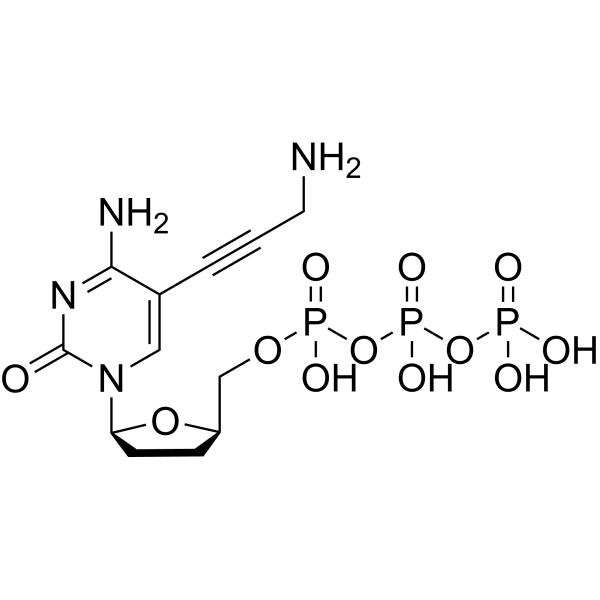 0 ImagesCat. No.: HY-132146CAS No.: 114748-56-05-Propargylamino-ddCTP, a nucleoside molecule that can be used to synthesis of cyanine dye-nucleotide conjugate which is used in nucleic acid labeling or sequence analysis.
-
EFdA-TP tetrasodium
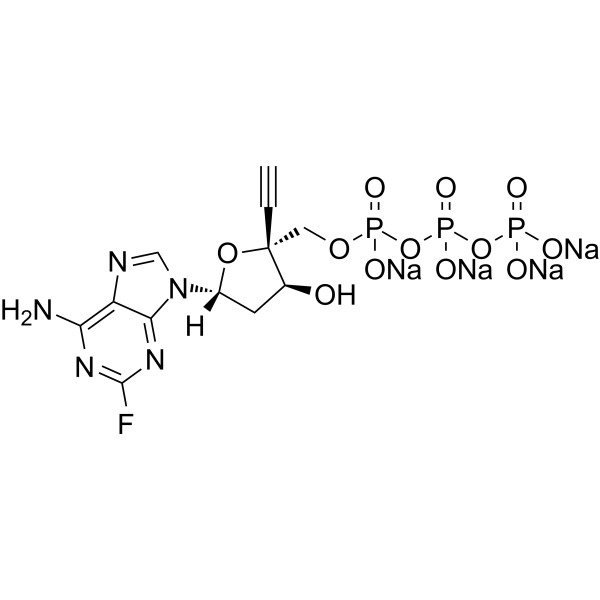 0 ImagesCat. No.: HY-138561BCAS No.: 2883783-00-2EFdA-TP tetrasodium is a potent nucleoside reverse transcriptase (RT) inhibitor. EFdA-TP tetrasodium inhibits RT-catalyzed DNA synthesis as an effective immediate or delayed chain terminator (ICT or DCT). EFdA-TP tetrasodium inhibits HIV-1 RT with multiple mechanisms. EFdA-TP (tetrasodium) is a click chemistry reagent, it contains an Alkyne group and can undergo copper-catalyzed azide-alkyne cycloaddition (CuAAc) with molecules containing Azide groups.
-
Fiacitabine
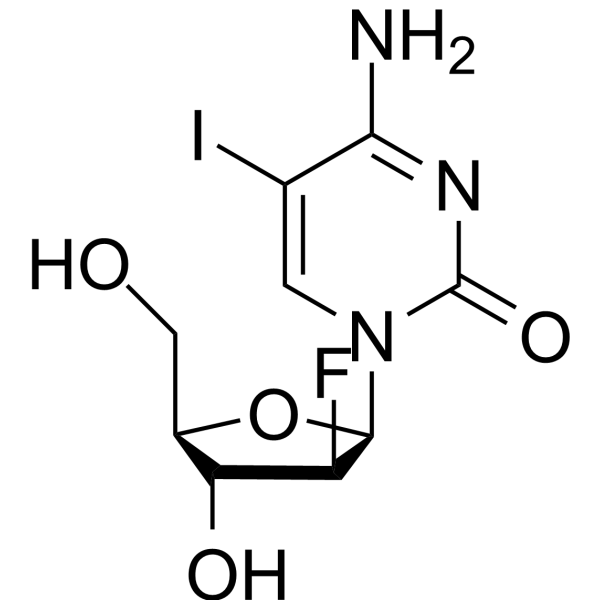 0 ImagesSynonyms: NSC 382097; FIAC; FOACFiacitabine (NSC 382097; FIAC; FOAC) is a potent and highly selective anti-herpesvirus agent. Fiacitabine acts as an inhibitor of HSV DNA polymerase, with a Ki of 0.26 μM for HSV-1 and 0.42 μM for HSV-2, respectively. Fiacitabine can be efficiently phosphorylated by thymidine kinase encoded by the virus itself to generate FIACTP, an active triphosphate metabolite. Fiacitabine is applicable to research related to herpesvirus infections.
-
2'-O-MOE-U
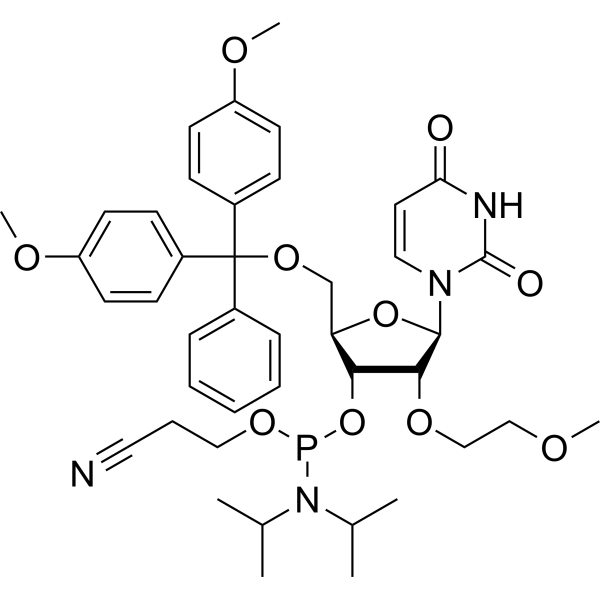 0 ImagesCat. No.: HY-W570886CAS No.: 163759-97-52'-O-MOE-U is a nucleic acid modification group (Phosphoramidite) with 3'-exonuclease inhibitory activity. 2'-O-MOE-U also exhibits gene silencing activity and double-stranded oligonucleotide stability. By forming steric interactions with 3'-exonuclease residues, 2'-O-MOE-U anchors the 3'-end of the siRNA guide strand in the hAgo2 PAZ domain, thereby regulating double-stranded thermal stability and enhancing base-pairing specificity. 2'-O-MOE-U does not induce IFNα production, can be incorporated at multiple sites of siRNA to enhance RNAi activity, and produces a synergistic effect with 2'-F modification. 2'-O-MOE-U has been widely used in studies related to breast cancer and other diseases.
-
Vitamin CK3
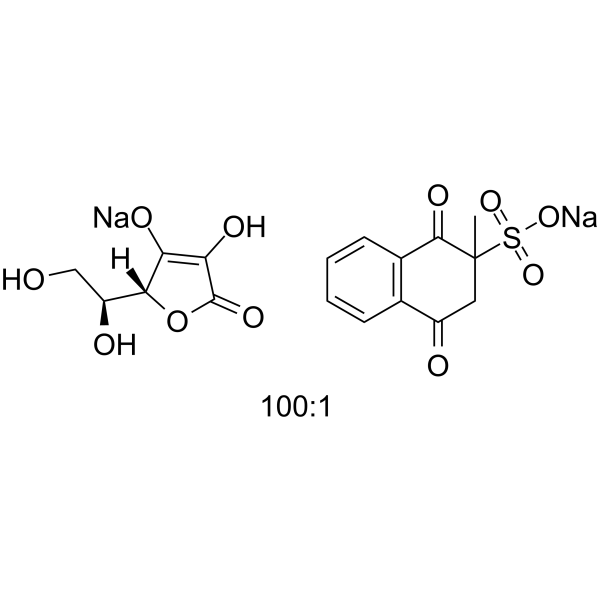 0 ImagesVitamin CK3 is the combination of Vitamin C and vitamin K3 (100:1 ratio). Vitamin CK3 can decrease MMP activity. Vitamin CK3 can reactivate DNases and cause cell autophagy. Vitamin CK3 can be used for the research of cancer, such as lung cancer.
-
8-NH2-ATP tetrasodium
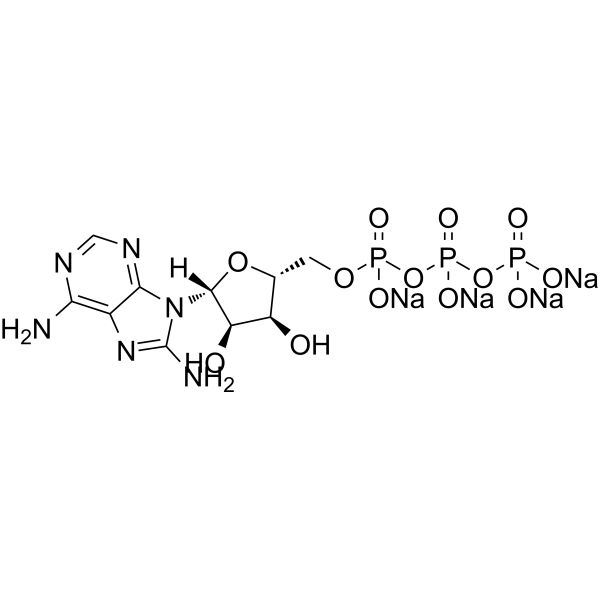 0 ImagesSynonyms: 8-Aminoadenosine-5'-O-triphosphate tetrasodium8-NH2-ATP tetrasodium, an inactive form of ATP, is produced by 8-NH2-Ado. 8-NH2-Ado tetrasodium induces apoptosis-related cleavage of poly (ADP-ribose) polymerase.
-
APE1-IN-3
 0 ImagesCat. No.: HY-149442CAS No.: 1227098-30-7APE1-IN-3 (Compound 1) is a APE1 inhibitor. APE1-IN-3 can be used for the research of cancer.
-
Deoxycytidine triphosphate-d14 dilithium
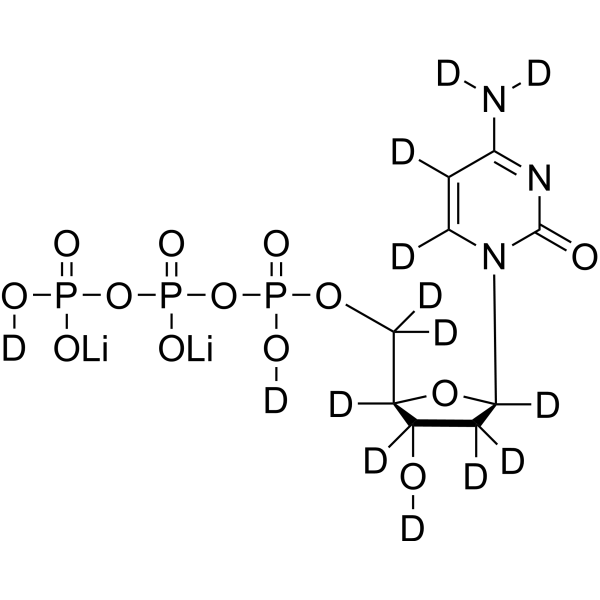 0 ImagesCat. No.: HY-101400SCAS No.: 2687960-70-7Synonyms: dCTP-d14 dilithium; 2′-Deoxycytidine-5′-triphosphate-d14 dilithiumDeoxycytidine triphosphate-d14 (dCTP-d14 dilithium; 2′-Deoxycytidine-5′-triphosphate-d14) dilithium is deuterium labeled Deoxycytidine triphosphate (HY-101400). Deoxycytidine triphosphate (dCTP) is a nucleoside triphosphate that can be used for DNA synthesis. Deoxycytidine triphosphate has many applications, such as real-time PCR, cDNA synthesis, and DNA sequencing.




